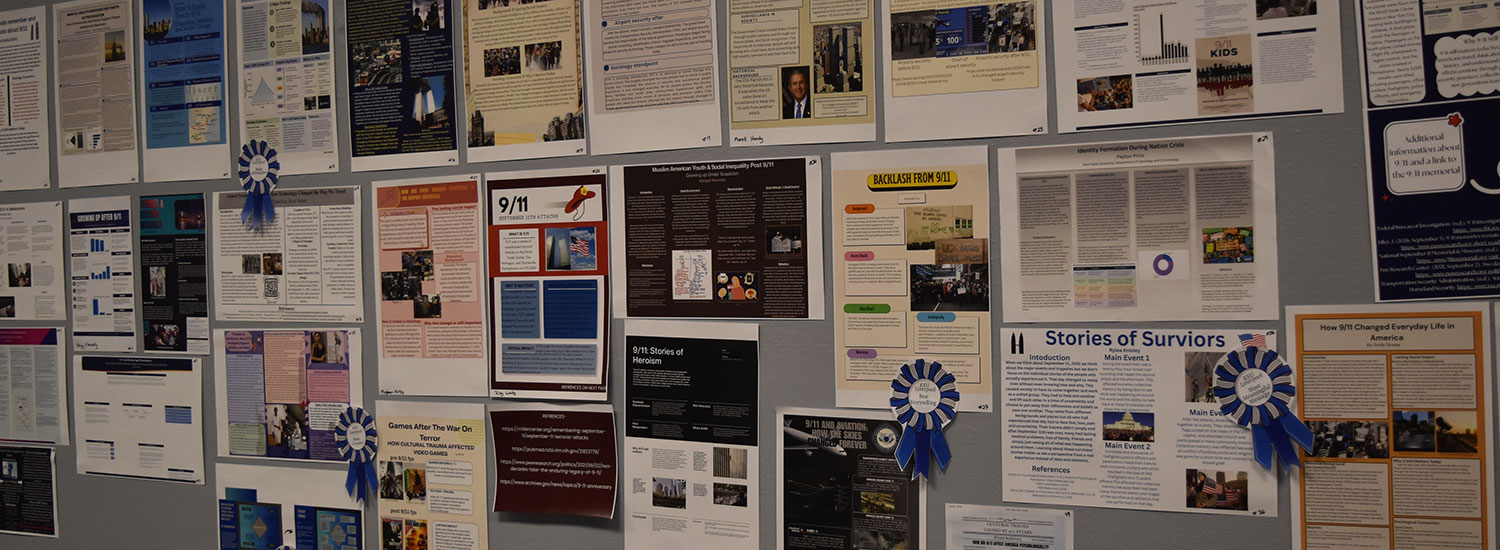
As part of 两性色午夜 University at East Liverpool鈥檚 25th anniversary remembrance of the September 11, 2001 terrorist attacks, sociology students created an academic poster exhibit examining how 9/11 and its aftermath reshaped American society.
The posters were displayed during the recent 9/11 Community Remembrance event on the East Liverpool Campus. While the event honored local first responders and provided an opportunity for the community to remember those whose lives were lost and changed by the attacks, the student exhibit encouraged visitors to also consider the continuing social consequences of 9/11.
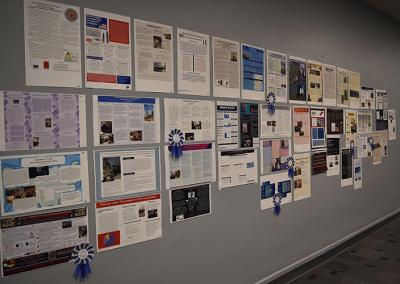
The student poster exhibit was created as part of sociology courses at 两性色午夜 East Liverpool and Salem taught by Associate Professor Lydia Rose, Ph.D.
Students were challenged to go beyond recounting the events of Sept. 11, 2001 and, instead, use sociology to ask a larger question: How can a single historical event change society? Their research explored subjects ranging from first responders and emergency communication systems to childhood trauma, collective memory, discrimination against Arab and Muslim Americans, national identity, resilience, fashion, consumer behavior and changes in everyday American life.
Community members attending the remembrance were invited to view the posters and voted in several categories. Eight students were recognized:
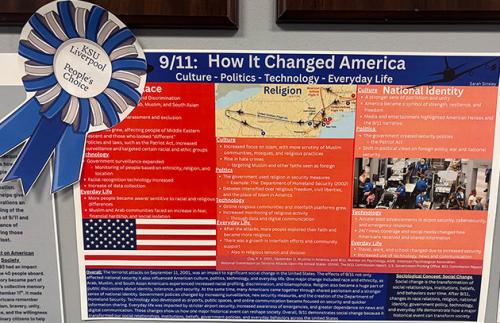
- People鈥檚 Choice: Sarah Sinsley for鈥�9/11: How It Changed America 鈥� Culture, Politics, Technology, Everyday Life;鈥� using the sociological concept of social change to examine how 9/11 influenced race relations, religion, national identity, government policy, technology, security and everyday behavior.
- Most Informative: Tatum Hameed for 鈥淗ow 9/11 Changed Emergency Communication Systems;鈥� examining communication problems experienced by first responders on 9/11 and subsequent institutional changes, including greater interoperability and the development of the nationwide FirstNet public-safety broadband network.
- Best Visual Design: Heather Dickey for 鈥�9/11 First Responders: Heroism, Sacrifice & the Lasting Social Impact;鈥� examining first responders not simply as individual heroes, but as members of families, occupational groups, communities and institutions while exploring solidarity, collective identity, long-term health consequences, institutional responsibility and collective memory.
- Most Meaningful Message: Rylea Knisley for 鈥淪tories of Survivors;鈥� focusing on the lived experiences behind the history of 9/11, exploring survivors, first responders, shared grief and the ways broadcasts, memorials and personal stories contribute to society鈥檚 collective memory.
- Best Storytelling: Amanda Fox for 鈥淏acklash from 9/11;鈥� examining prejudice, discrimination and hate directed toward Arab and Muslim Americans following the attacks and connecting those experiences with more recent examples and demonstrating how the social consequences of historical events can persist across time.
- Most Moving: Makayla Savo for 鈥淧TSD and 9/11 in Adolescence;鈥� examining the experiences of children and adolescents who encountered 9/11 and exploring research on trauma, anxiety, grief, PTSD and other potential long-term mental-health consequences.
- Most Thought-Provoking: Jermani Bryant for 鈥淏uilding Resilience After National Tragedy: How 9/11 Shaped American Adolescents;鈥� exploring socialization, resilience, community and collective memory to consider how families, schools, peers and media helped young people understand 9/11 and how generations born afterward continue to learn about and interpret the event.
- Most Creative: Marie Masters for 鈥淭hreads of Resilience: How 9/11 Reshaped Apparel, Identity, and Retail;鈥� examining an often-overlooked dimension of social change: clothing and consumer behavior and exploring changing workplace dress, comfort-oriented consumption, patriotic merchandising and the role of modest fashion in expressions of Muslim identity after 9/11.
Together, the projects demonstrated the breadth of the sociological imagination as the students examined how the consequences of 9/11 extended into institutions, communities, relationships, identities and even seemingly ordinary aspects of everyday life.
鈥淚 wanted students to understand that 9/11 is more than an event they read about in a history book,鈥� Rose said. 鈥淪ociology asks us to look at the connections between individual experiences and larger social forces. These students examined how 9/11 changed institutions, communities and everyday life, and then had the opportunity to share what they learned with the community. That is what makes applied sociology and community-engaged learning so valuable.鈥�
Noting that for many of today鈥檚 college students, September 11 is an event that occurred before they were born, Rose said the poster project provided an opportunity for a new generation to research the attacks and their aftermath, while considering how collective memory allows significant historical events to continue shaping people who did not experience them firsthand.
鈥淭he exhibit also complemented the larger purpose of the community remembrance event by connecting the experiences of the past with questions facing communities today, such as how societies respond to crisis; how institutions change; how communities remember; and how people support one another following collective trauma,鈥� she said.
Cutline A/B: Student posters related to the events of Sept. 11, 2001.
Cutline C: A winning poster submission