
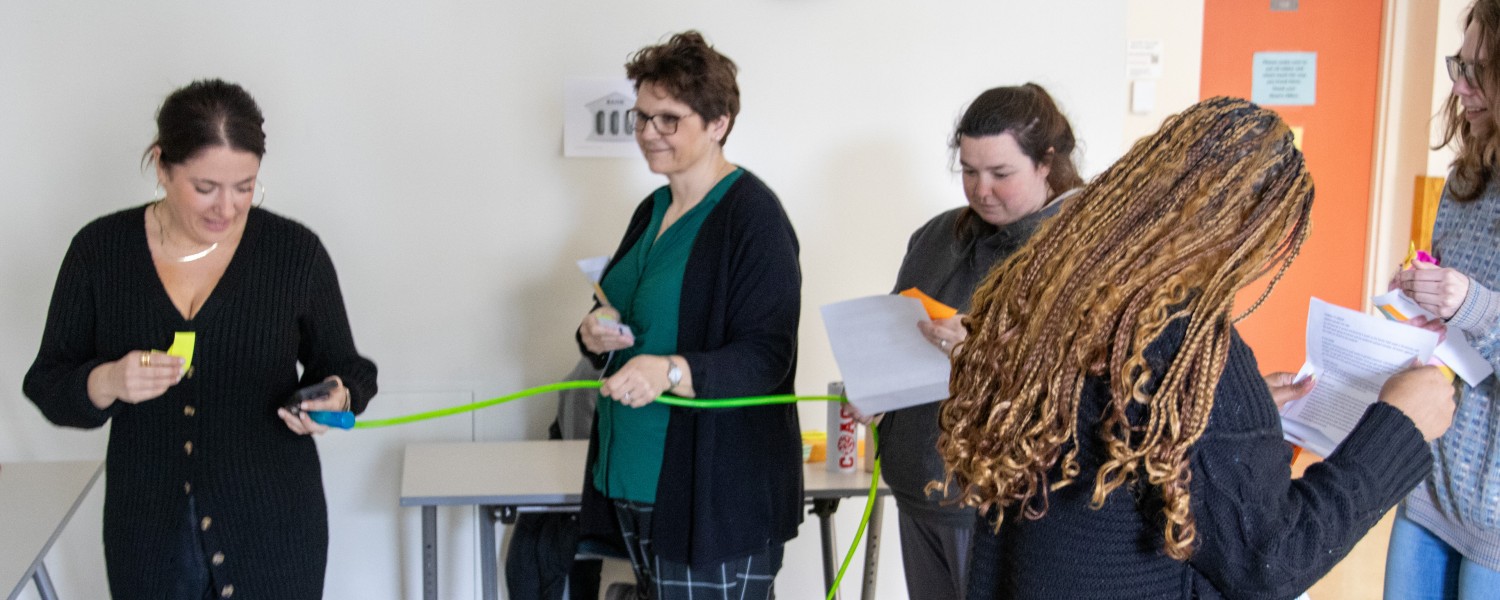
There鈥檚 nothing like a poverty simulation exercise to get students in 两性色午夜鈥檚 Long-Term Care Administration program to challenge assumptions, deepen empathy and better prepare themselves for leadership roles in long-term care settings.
The simulation immersed students in the day-to-day realities faced by individuals and families living at or near the poverty level by mirroring the lived experiences of the future workforce they will one day manage.
Associate Lecturer Donna Alexander, coordinator of 两性色午夜鈥檚 Long-Term Care Administration program in the School of Lifespan Development and Educational Sciences, brought this experiential learning opportunity to LTCA students.
鈥淎s future licensed nursing home administrators, our students will supervise and support employees who may be working full-time and still struggling to make ends meet,鈥� said Alexander. 鈥淭his simulation gives them a safe but powerful way to experience the stress, trade-offs and difficult choices that poverty can create, and helps to develop empathy that will shape them into better, more compassionate leaders.鈥�
Why Poverty Simulation Matters
Alexander offered the simulation for two reasons:
- Building empathy for the workforce:
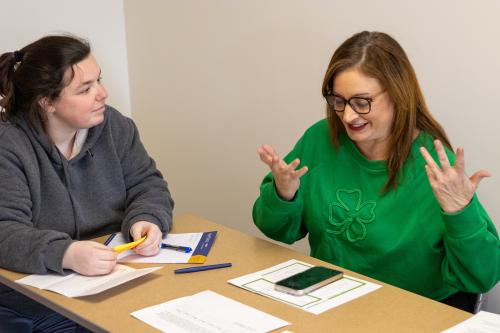
The simulation helps internship students and future licensed nursing home administrators better understand the challenges faced by many long-term care employees who may struggle with expenses despite steady employment. - Guidance from industry advisors:
Members of the LTCA Nursing Home Administration Advisory Committee recommended the simulation after Alexander shared her own experience volunteering years ago at a similar poverty simulation staged by graduate counseling students in the College of Education, Health and Human Services.
Alexander believes that initial simulation left a lasting impression on her approach to teaching leadership and administration. After exploring options, she discovered that formal poverty simulations can be costly, but she was determined not to let financial barriers stand in the way. So, she designed and implemented a simulation tailored specifically to LTCA students鈥攄emonstrating innovation and commitment to student learning.
The success of the simulation depended on collaboration across programs and disciplines.
Student volunteers included:
- Four Long-Term Care Administration I students (who volunteered in lieu of a final project)
- Two Clinical Mental Health Counseling graduate students
- One school counseling graduate student
- One Human Development and Family Science student ambassador
Participants included four LTCA Internship students enrolled in Long-Term Care Administration major. This structure allowed internship students to fully engage in the simulation while their peers managed the various community 鈥渟tations鈥� that reflected real-life situations.
Inside the Simulation
Students navigated a compressed version of several 鈥渨eeks鈥� in poverty, moving through community stations under strict time constraints. Student volunteers managed stations using timers to reinforce the constant pressure faced by individuals with limited resources.
Each interaction highlighted how limited time, money and transportation can quickly compound challenges鈥攅specially for full-time workers.
Preparing Compassionate Leaders in Long-Term Care
Accredited by the National Association of Long-Term Care Administrator Boards, 两性色午夜 University鈥檚 Long-Term Care Administration program has a strong academic foundation that aligns with professional standards.
Experiential learning opportunities like poverty simulation reinforces why students should consider the LTCA program at 两性色午夜:
- Real-world preparation for leadership in nursing homes and long-term care settings
- A focus on ethical, empathetic and people-centered administration
- Strong connections between classroom learning, internships and industry guidance
- Accreditation that supports licensure pathways and professional credibility
By participating in poverty simulation, LTCA students gain more than academic knowledge鈥攖hey develop perspective, empathy and leadership skills that will directly influence the quality of care, workplace culture and decision-making in long-term care communities.
鈥淓xperiences like this are not just educational; they鈥檙e transformational,鈥� said Alexander.