
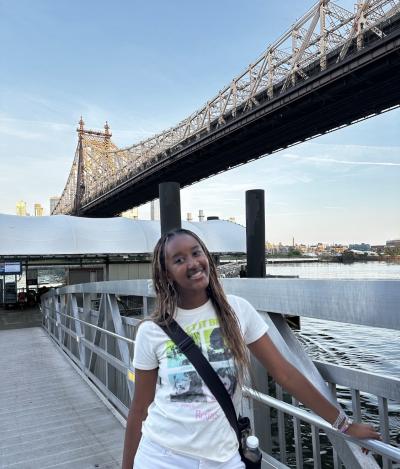
For Yasmine Belko, the Summer Undergraduate Research Experience (SURE) Program offered an opportunity to explore a region with deep personal significance while developing a new perspective on climate vulnerability, urbanization, and the impacts of history on present-day communities.
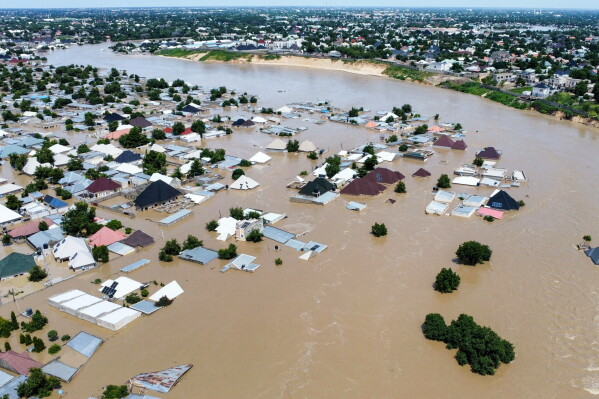
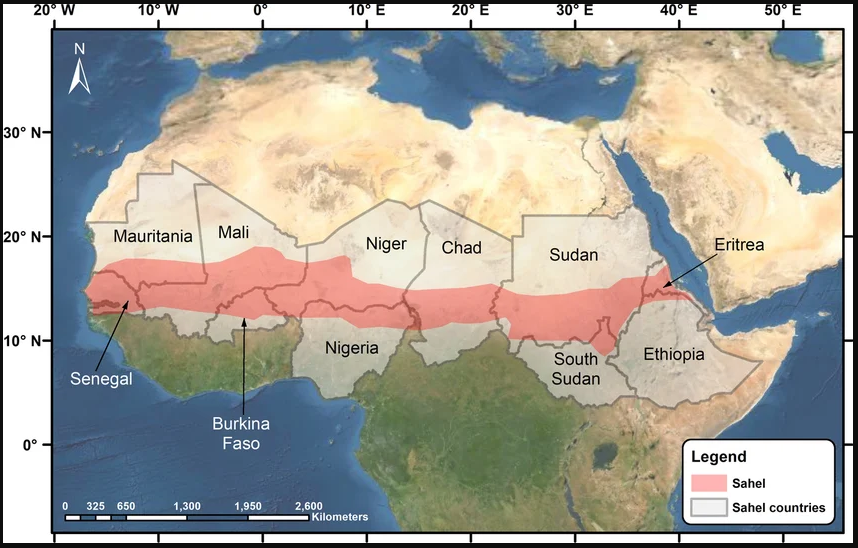
Supported by the 两性色午夜 Environmental Science and Design Research Institute (ESDRI) in the SURE program, Belko conducted research on urban flooding in the Sahel region of Africa, focusing particularly on Niger and Senegal. Mentored by Sarah Smiley, Ph.D., professor and chair of the Department of Geography, her project examined not only the environmental impacts of flooding, but also the historical and social factors that have contributed to the region鈥檚 vulnerability.
鈥淭he SURE program was nothing short of amazing! I learned so much in such a short amount of time and I am so grateful for all the support I received.鈥�
Belko鈥檚 research began with an examination of climate-related disasters in the Sahel, including droughts and floods, as well as climate adaptation strategies in the region. As her research progressed, however, she began to recognize that understanding the region鈥檚 vulnerability required looking beyond climate change itself.
鈥淚 realized that before I could fully understand the impacts of climate change, I needed to better understand the foundational factors that make the Sahel so environmentally vulnerable and why the region is experiencing some of the world's most severe consequences of climate change.鈥�
That shift led Belko to investigate urbanization and the historical development of cities in the Sahel. A conversation with a professional from France introduced another perspective that helped shape her project: the relationship between colonialism, urban systems, and environmental vulnerability.
鈥淭his led me to explore the effects of colonialism on urban systems in the region and how those historical structures may have contributed to present-day environmental vulnerability.鈥�
The research also had a personal connection for Belko. Her father is from Niger, and his experiences helped bring the issue of flooding in the region into sharper focus. 鈥淢y father, who is from Niger, first opened my eyes to the severe flooding that has affected his hometown and communities across the country.鈥�
One of the most significant discoveries during Belko鈥檚 research was the historical role of urban planning in shaping communities and inequalities across Africa. 鈥淚 learned a countless amount of interesting things during this time. One that stands out is the idea that urban planning was used as a tool of power and social control in Africa.鈥�
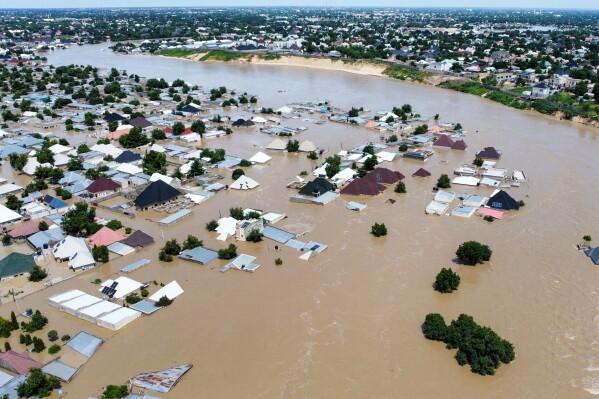
Her research revealed how historical land policies and inequalities can continue to influence where communities are located and their exposure to environmental hazards. In Niger and Senegal, Belko found that some flood-prone neighborhoods are connected to colonial land policies and broader inequalities that shaped the development of African cities. Belko also explored the rapid growth of Niger鈥檚 population and its relationship to flood vulnerability. Her research examined the country鈥檚 population growth from 4,000 residents in 1930 to 1.3 million in 2021, as well as the complex flood patterns affecting the country.
鈥淚 also learned that there are two annual flood cycles in Niger; a local flood caused by tributary inflow during the June to October rainy season and another one caused by rainfall in Guinea and Mali, caused by the Niger River's confluences.鈥�
The research process was not without challenges. Because the Sahel is relatively under-researched, finding sufficient literature and reliable data proved difficult. Belko said the geopolitical situation in the region is one reason there are relatively few researchers working in the field, making the process of finding reliable and relevant sources particularly challenging. Fortunately, connections made through the SURE experience helped Belko gain access to additional resources. Belko stated, 鈥淭hankfully, Dr. Smiley's connections led me to the Sahel Research Group at the University of Florida which has plenty of useful resources and members that were more than happy to help with my research!鈥�
Beyond the research itself, the SURE experience provided Belko with opportunities to develop skills that extend beyond traditional academic research. One particularly memorable experience involved conducting an interview and discussion entirely in French with a professor in Niger. 鈥淥ne skill that I learned that was particularly useful was the art of interview. I had an interview/discussion with a professor in Niger entirely in French which I felt was a great way for me to practice my interviewing skills.鈥�
The experience also encouraged Belko to learn more about herself as a researcher, sharing, 鈥淚 immersed myself into a completely new field of study and I learned a lot about myself during this process.鈥�
Support from the Environmental Science and Design Research Institute (ESDRI) also played an important role in sustaining Belko鈥檚 motivation throughout the summer. Although her project primarily consisted of a literature review, she said there were moments when it was tempting to stop when the SURE program ended, but the continued support encouraged Belko to keep pursuing questions beyond the initial scope of the summer project. She shared, 鈥淗aving ESDRI鈥檚 support really pushed me to learn more and exceed my own expectations鈥nowing that ESDRI was supporting both my project and my continued research motivated me to keep learning, exploring, and digging deeper into my research.鈥�
Ultimately, the SURE program provided Belko with an opportunity to connect personal experiences, academic research, and a complex global issue. By examining urban flooding in the Sahel region of Africa through environmental, historical, and social perspectives, her project expanded her understanding of climate vulnerability while strengthening her research skills.
Belko will continue working on this project with Dr. Smiley this fall. And she will continue working with ESDRI as she was recently accepted into the ESDRI Undergraduate Fellowship Program.