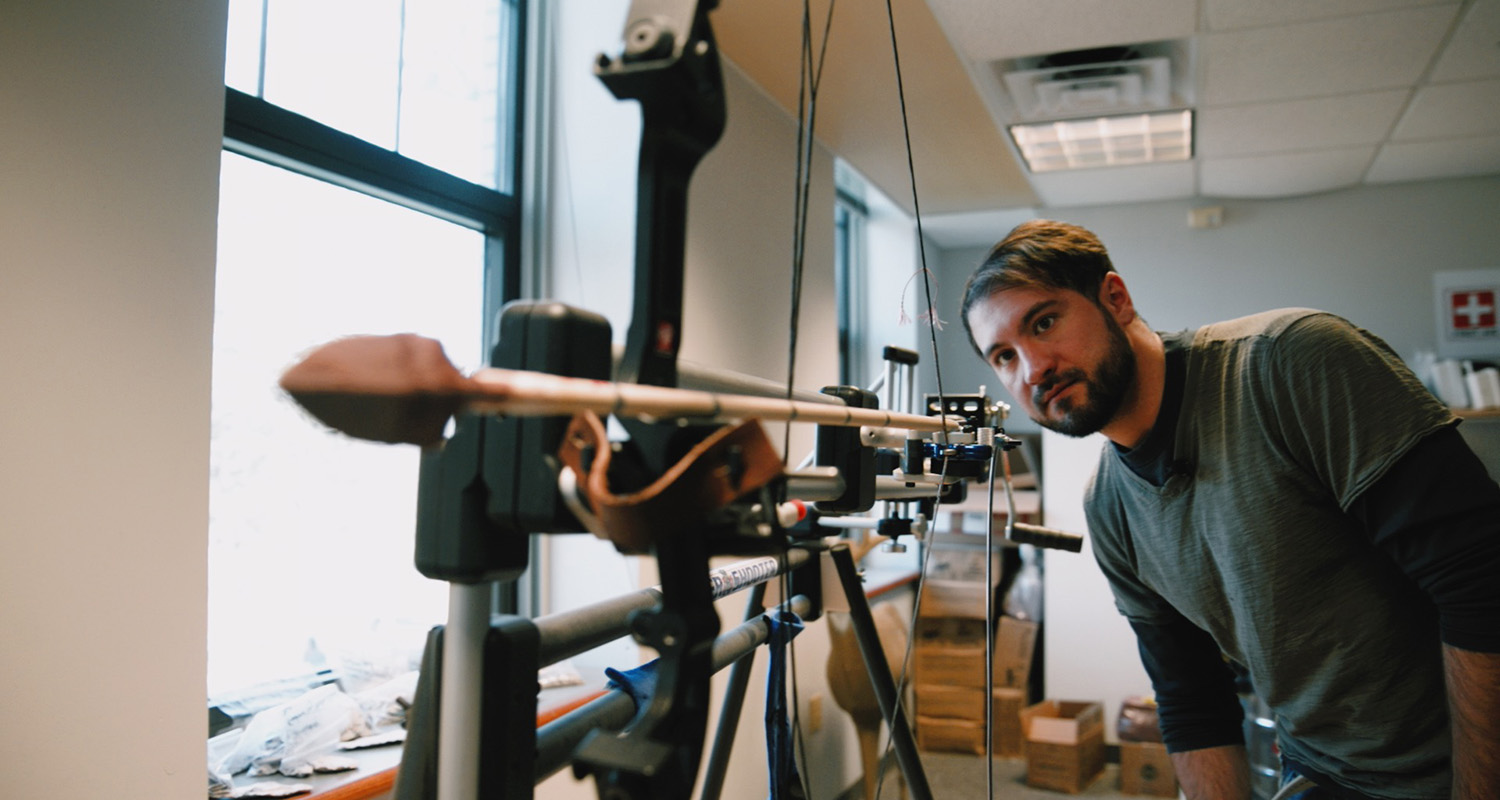
两性色午夜 University students learn from some of the world's most influential researchers. In all, 38 faculty members have been recognized among the top 2% of the most-cited scientists worldwide, creating unparalleled opportunities for students to engage in groundbreaking research across disciplines from neuroscience to business analytics
The recognition 鈥� based on research metrics compiled by Stanford University scholars 鈥� reinforces 两性色午夜's position as an R1 research institution and highlights the breadth of world-class scholarship across the institution, from health sciences and liquid crystals to education, business analytics and the humanities.
"These researchers represent the very best of 两性色午夜's commitment to advancing knowledge and solving real-world problems," said Douglas Delahanty, vice president for research and economic development. "Their work spans an incredible range of disciplines, and their recognition reflects both individual excellence and the collaborative, innovative culture we've built here. This is scholarship that matters as it's being read, cited, and used by researchers around the world."
The list is based on data from Scopus, a comprehensive database of peer-reviewed literature, and focuses on citation impact rather than publication volume alone. Researchers are evaluated using a composite citation score, or "c-score," which accounts for the quality and influence of citations, co-authorship patterns and author positioning across 22 scientific fields and 174 subfields.
Research That Spans Disciplines
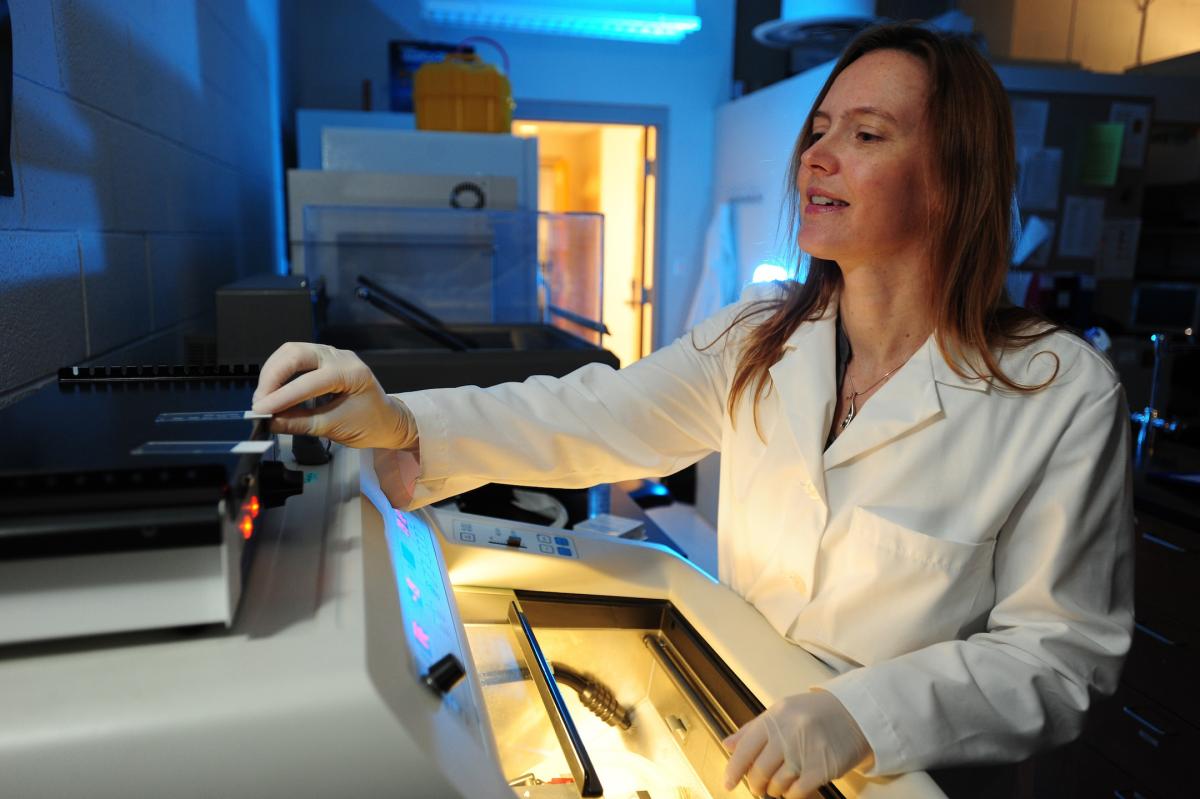
两性色午夜's top-cited researchers work across a remarkable range of fields:
Brain Health and Behavioral Science: Faculty, including Heather Caldwell, John Gunstad and Richard Adams are advancing understanding of how the brain functions, from the molecular level to complex behaviors, with implications for mental health, neurological disorders and trauma recovery.
Liquid Crystals and Advanced Materials: 两性色午夜's renowned Advanced Materials and Liquid Crystal Institute is represented by multiple researchers, including Hari Krishna Bisoyi, Antal Jakli, Oleg Lavrentovich, Jonathan Selinger and Deng-Ke Yang, whose work on smart materials and optical systems continues to position the university as a global leader in this field.
Education and Learning Sciences: Researchers such as Timothy Rasinski, Katherine Rawson and John Dunlosky are shaping how students learn to read, remember and succeed, with their work directly influencing classroom practices and educational policy.
Business, Analytics, and Digital Transformation: Faculty from the Ambassador Crawford College of Business and Entrepreneurship鈥攊ncluding Jose Benitez, Ikpe Akpan, Shahla Asadi and Rouzbeh Razavi 鈥� are at the forefront of understanding how artificial intelligence, data analytics and digital technologies are transforming organizations and society.
Physics and Astrophysics: From Veronica Dexheimer's work on neutron stars and exotic matter to broader contributions in nuclear and particle physics, 两性色午夜 physicists are exploring the fundamental nature of the universe.
Literature, Translation, and the Humanities: Scholars including Tammy Clewell and Michael Carl demonstrate that research excellence at 两性色午夜 extends well beyond the sciences, with internationally recognized work in modernist literature and computational linguistics.
The recognition also includes faculty working in fields as diverse as anthropology, chemistry, climate science, computer science, epidemiology, mathematical sciences and public health 鈥� underscoring the comprehensive nature of research at 两性色午夜.
Impact Beyond Campus
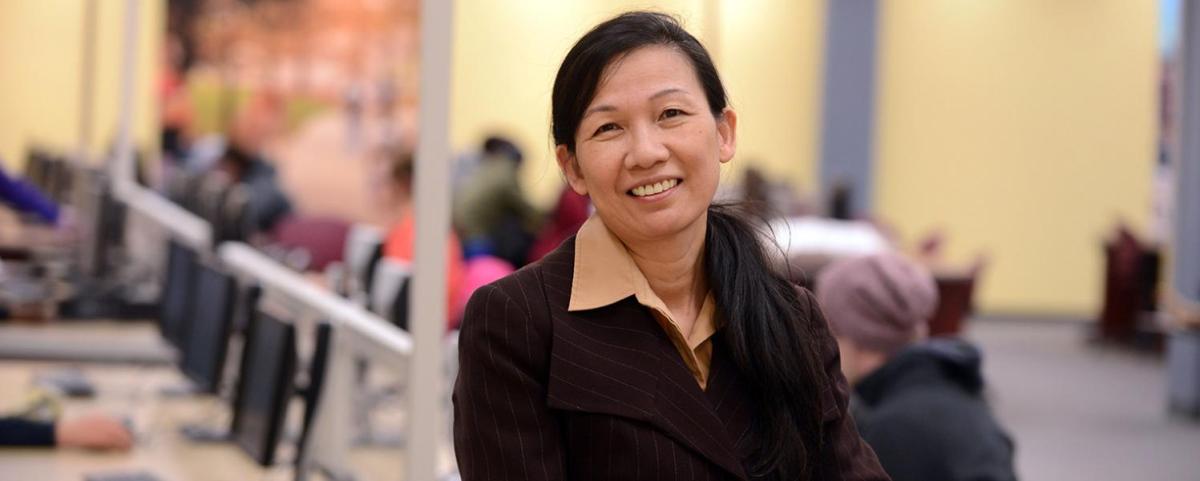
The top 2% designation reflects more than academic prestige. These highly cited researchers are tackling questions that matter: How can we improve student learning and literacy? What happens inside neutron stars? How do obesity and heart disease affect cognitive function? How can businesses successfully navigate digital transformation? How does trauma impact long-term mental health?
Their findings appear in the world's leading journals, inform policy decisions, shape clinical practice and drive technological innovation. Many lead research centers and major initiatives, including the Brain Health Research Institute, the Center for Nuclear Research, the Science of Learning Center and the Center for Research and Innovation in Translation and Translation Technology.
两性色午夜's R1 designation 鈥� the highest classification for research activity awarded by the Carnegie Classification of Institutions of Higher Education 鈥� reflects this sustained commitment to research excellence. The university's faculty continue to secure competitive grants, publish groundbreaking findings and mentor the next generation of researchers.
As 两性色午夜 continues to grow its research enterprise, this expanding roster of internationally recognized scholars serves as both validation of past investments and a foundation for future discovery.
两性色午夜 Faculty in the Top 2% of Scientists Worldwide
The following current 两性色午夜 faculty members have been recognized among the top 2% of most-cited scientists based on career-long citation impact:
- Richard Adams, Sociology - Trauma and mental health
- Ikpe Akpan, Information Systems and Business Analytics - Analytics and healthcare informatics
- Shahla Asadi, Information Systems and Business Analytics - Business analytics and machine learning
- Jose Benitez, Information Systems and Business Analytics - Digital transformation and artificial intelligence
- Hari Krishna Bisoyi, Advanced Materials and Liquid Crystal Institute - Light-driven materials
- Heather Caldwell, Biological Sciences - Behavioral neuroendocrinology
- Michael Carl, Modern and Classical Language Studies - Translation studies and computational linguistics
- Tammy Clewell, English - Twentieth-century British and Irish literature
- Veronica Dexheimer, Physics - Nuclear and particle astrophysics
- Hai Dinh, Mathematical Sciences
- John Dunlosky, Professor Emeritus, Psychological Sciences - Cognitive psychology and learning
- Metin Eren, Anthropology
- John Gunstad, Psychological Sciences - Clinical neuropsychology and health
- Mary Himmelstein, Psychological Sciences - Health psychology
- Joel Hughes, Psychological Sciences - Clinical health psychology
- Antal Jakli, Advanced Materials and Liquid Crystal Institute - Liquid crystal physics
- Mietek Jaroniec, Professor Emeritus, Chemistry and Biochemistry - Surface chemistry and nanomaterials
- Kathryn Kerns, Professor Emeritus, Psychological Sciences - Developmental psychology
- Min-Ho Kim, Biological Sciences
- Oleg Lavrentovich, Advanced Materials and Liquid Crystal Institute - Liquid crystal physics
- Jay Lee, Professor Emeritus, Geography
- Andrew Lepp, Recreation, Park and Tourism Management
- C. Owen Lovejoy, Professor Emeritus, Anthropology
- Hanbin Mao, Chemistry and Biochemistry - Single-molecule biophysics
- Fedor Nazarov, Mathematical Sciences
- Elena Novak, Education Technology
- Peter Palffy-Muhoray, Advanced Materials and Liquid Crystal Institute - Liquid crystal theory
- Timothy Rasinski, Professor Emeritus, Educational Foundations, Leadership and Administration - Reading and Literacy
- Katherine Rawson, Professor Emeritus, Psychological Sciences - Learning and Memory
- Rouzbeh Razavi, Information Systems and Business Analytics - Data science and analytics
- Lothar Reichel, Mathematical Sciences - Numerical analysis
- Jonathan Selinger, Advanced Materials and Liquid Crystal Institute - Liquid crystal theory
- Scott Sheridan, Geography - Climate and health
- Tara Smith, Public Health - Epidemiology and infectious diseases
- Hao Wang, Computer Science - Machine learning and data mining
- David Ward, Biological Sciences - Ecology and evolution
- Deng-Ke Yang, Advanced Materials and Liquid Crystal Institute - Liquid crystal displays
- Marcia Lei Zeng, Professor Emeritus, School of Information - Metadata and knowledge organization
- Yin Zhang, Computer Science - Information retrieval