
Who Pays for Public Higher Education?

Who Pays for Public Higher Education?
Now comes the question that drives every family decision: Where does the money actually come from? Decades ago, public universities were public investments 鈥� funded by taxpayers, affordable to students. That partnership has shifted. State support has declined significantly. The burden has moved to families. Understanding that history changes how you read the bill.
Public Universities Didn't Get Expensive. Public Funding Declined.
For much of 两性色午夜's history, the state of Ohio was the university's primary funder. That era is gone, and it ended quietly, over decades, without many Ohioans noticing. Today, students and families bear the load the state once carried. When people ask why tuition costs what it costs, this is the answer no one talks about: Public universities didn't get expensive; their public funding declined.
两性色午夜 has responded the way Ohioans would want: by managing responsibly. The university does not run deficits. It does not draw on savings to balance a budget. It has made hard decisions, like consolidating colleges, repurposing buildings and reducing its workforce, to live within its means. What 两性色午夜 asks of Columbus is not a bailout. Instead, it鈥檚 for a partnership worthy of what the university returns to Ohio.
Cost to Attend
One year of tuition plus room and board
$51,650
Average private college in Northeast Ohio
$26,300
两性色午夜
Average student debt after a bachelor's degree
~$47,730
Private for-profit four-year, national
~$39,510
Private nonprofit four-year, national
~$31,960
Public four-year, national
$24,500
两性色午夜
Nearly 40%
of 两性色午夜 students graduate with no debt
Access and opportunity
32.6%
of 两性色午夜 students are Pell Grant recipients
$10
return on every state dollar invested
鈥淏ut we do have so much agency and creativity.鈥�
Meet the guest
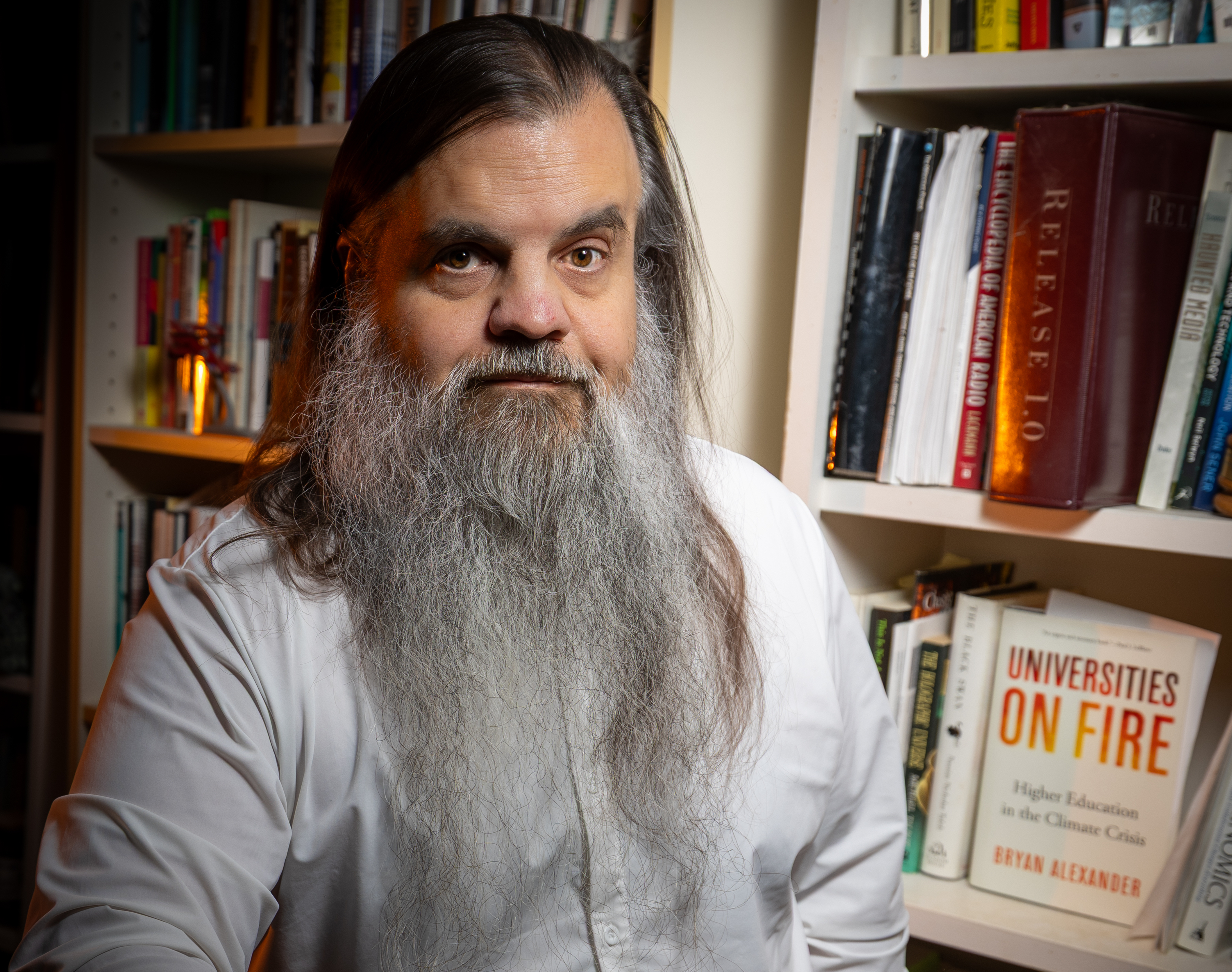
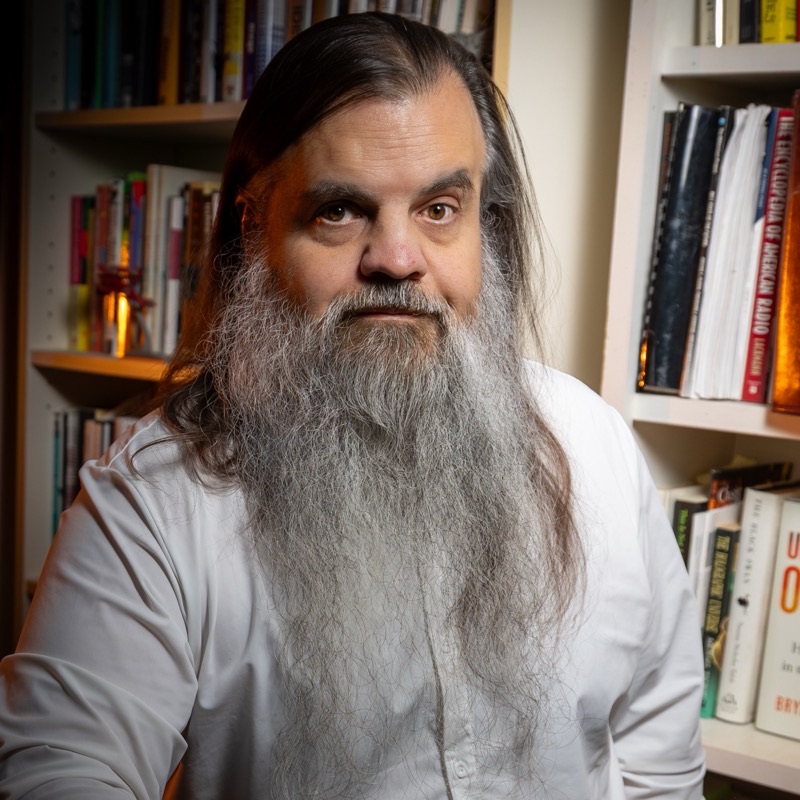
Bryan Alexander is a senior scholar at Georgetown University and a futurist who has tracked higher education's trend lines for two decades. His latest book is 鈥淧eak Higher Ed: How to Survive the Looming Academic Crisis.鈥� His previous book, 鈥淯niversities on Fire: Higher Education in the Climate Crisis,鈥� won the 2024 Frederic W. Ness Book Award. He sat down with 两性色午夜 President Todd Diacon on the ToddCast for the conversation that runs through this series.
Futurist and Georgetown Senior Scholar Bryan Alexander writes, in "Peak Higher Ed," of transformation driven by what he calls the "polycrisis." Alexander and 两性色午夜 President Todd Diacon discuss factors that have combined with the decline of both undergrad-aged students and state funding of public higher ed.
Transcript
Diacon: 鈥f just a public support, in terms of opinions, for higher ed as a good, a public good, was a mark of peak higher ed, it鈥檚 now opinions turning away from the value of college. So as we think about that polycrisis, the reason I mentioned earlier what I mentioned, being a historian, I mean, I鈥檓 literally here at 两性色午夜 University, and two things come to mind. One is I鈥檓 literally sitting two blocks away from where four students were shot by National Guardsmen on our campus. So my guess is you could argue that was a real crisis. It was a real crisis at 两性色午夜. But I guess what would be different now is massive enrollment growth in that period, still very healthy levels of state funding to the point that at that period, two-thirds of the revenue of 两性色午夜 University came from the state of Ohio.
Alexander: Two-thirds.
Diacon: Two-thirds. And today it鈥檚 22% at 两性色午夜 University.
Alexander: That鈥檚 higher than many. In Ohio, of course, you are working under SB1, which is a very comprehensive law put in place by your Republican majority government. You know, many other viewers and listeners to this program will be in other states that have other political compulsions on them, be they in Texas or in Florida. And of course, everybody in the United States has to deal with the federal government and its various cuts to research funding, its investigations of different universities and so on. The big macroeconomic picture, you know, that is, you know, escalating income inequality and wealth inequality. The transition of our labor market continuing to move away from industry toward service. A lot of these are things that we have to surf as best we can. But we do have so much agency and creativity.
Public support for higher education has eroded dramatically. 两性色午夜's state funding dropped from two-thirds of its budget in the 1970s to 22% today 鈥� a shift driven by demographic decline, political constraints and broader economic inequality. These aren't problems any single university can solve alone, but institutions still have agency in how they respond.
The State's Dollar, Traced
From 两性色午夜 to KeyBank
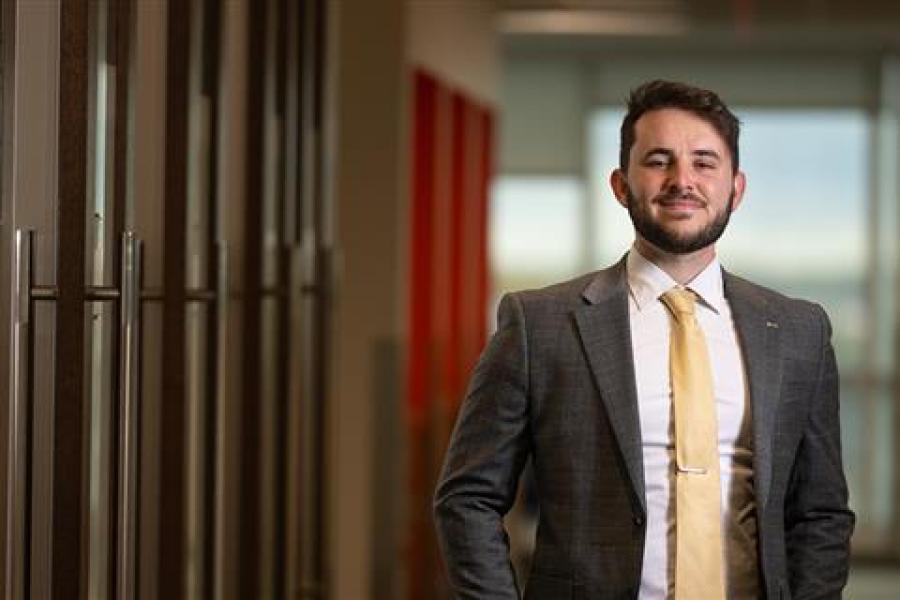
Cameren Hicks, '22, was a first-generation student whose Choose Ohio First scholarship 鈥� state money 鈥� paid for an applied mathematics degree and paired it with real industry projects. He met KeyBank at a 两性色午夜 career fair, interned and now leads fraud modeling and analytics; his team stopped $250,000 in fraudulent transactions in a single quarter. One state scholarship, one Ohio bank, one graduate protecting Ohio customers. That is what the state's dollar buys.
Read More »What You Can Say
A generation ago, the state of Ohio covered most of the cost of tuition. Today, it covers about one-fifth. Students and families are carrying what the state used to carry.
两性色午夜 hasn't waited for rescue 鈥� it balances its budget every year and has restructured to live within its means. That's an institution worth investing in.
State support for 两性色午夜 is the highest-leverage economic development dollar in Northeast Ohio.
Up Next:
In this series
- College Is Still Worth It Go to this story 鈫�
- Tops in Student Support: It Matters Go to this story 鈫�
- A University in Motion Go to this story 鈫�
- Who Pays for Public Higher Education? You're reading this
- Fewer 18-Year-Olds Go to this story 鈫�
- When the World Gets Complicated, You Want a University Nearby Go to this story 鈫�
- The Costs of Doing Nothing? Go to this story 鈫�
Ohio's population of 18-year-olds is shrinking 鈥� and it will keep shrinking for a decade. In our next installment: why the demographic cliff makes 两性色午夜 more essential, not less, and how the fastest-growing college students in Ohio are still in high school.