
When the World Gets Complicated, You Want a University Nearby

You Want a University Nearby
This is the sixth of seven installments making the case for higher education's impact. Ask what a university is for, and most people say degrees. Fair enough 鈥� but incomplete. This time: what a region gets from a university between graduations.
When the World Gets Complicated, You Want a University Nearby
A Standing Army of Expertise.
Ask what a university is for. Most people say degrees.
Fair enough, but incomplete. When artificial intelligence upends a profession, when an industry is forced to transform itself, when a community faces questions no one has faced before, the region with a great public university has something the region without one does not: a standing army of expertise, already on the ground and already invested.
两性色午夜's researchers 鈥� its scientists, engineers, entrepreneurs, historians, artists and so many more 鈥� are helping navigate 21st-century challenges. Take AI, which is on everybody's mind. 两性色午夜 prepares students across the disciplines to extend their own problem-solving skills with AI, as the university increasingly becomes the place where Northeast Ohio comes to embrace its future.
鈥淭hink about the resources that the academy has.鈥�
Meet the guest
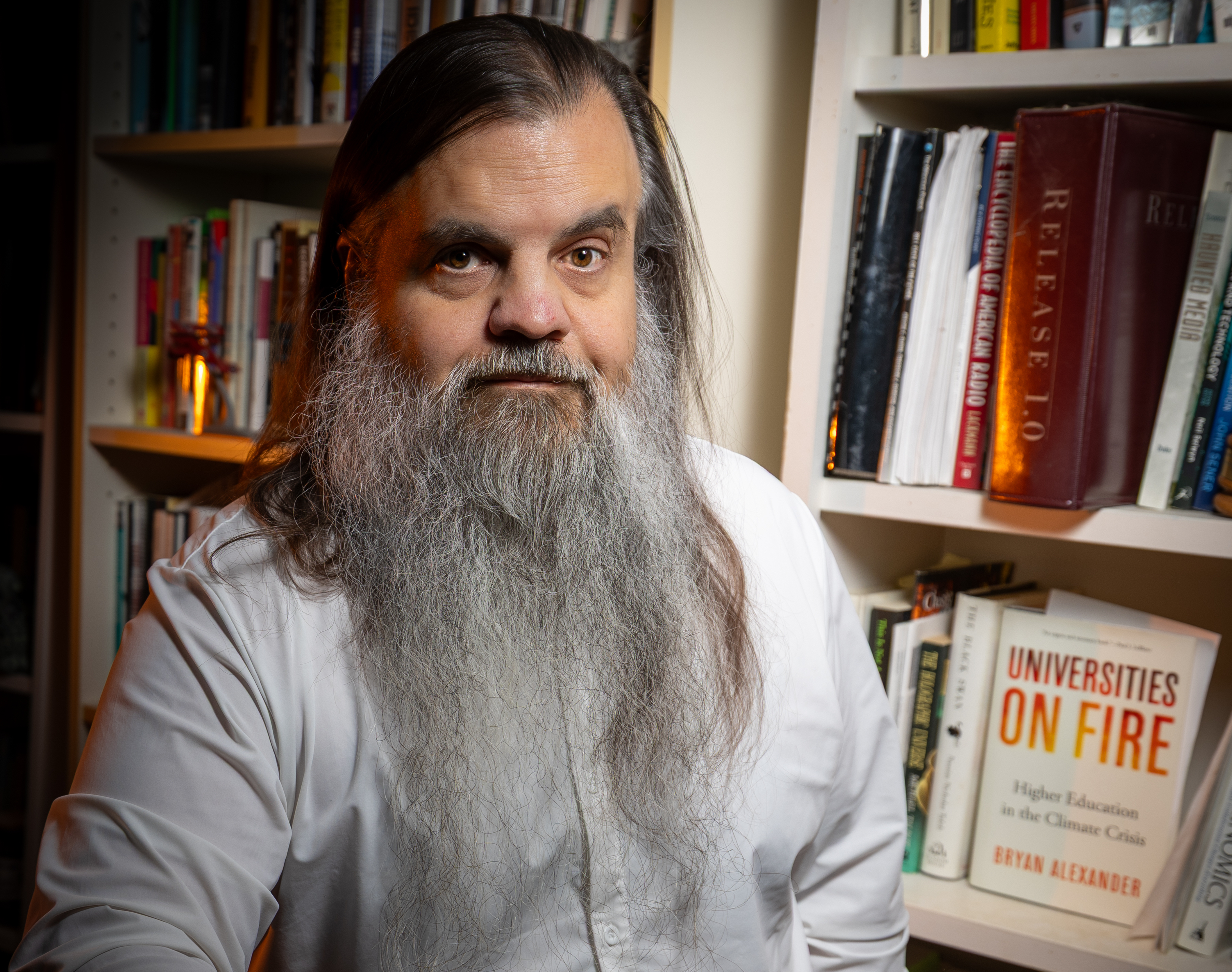
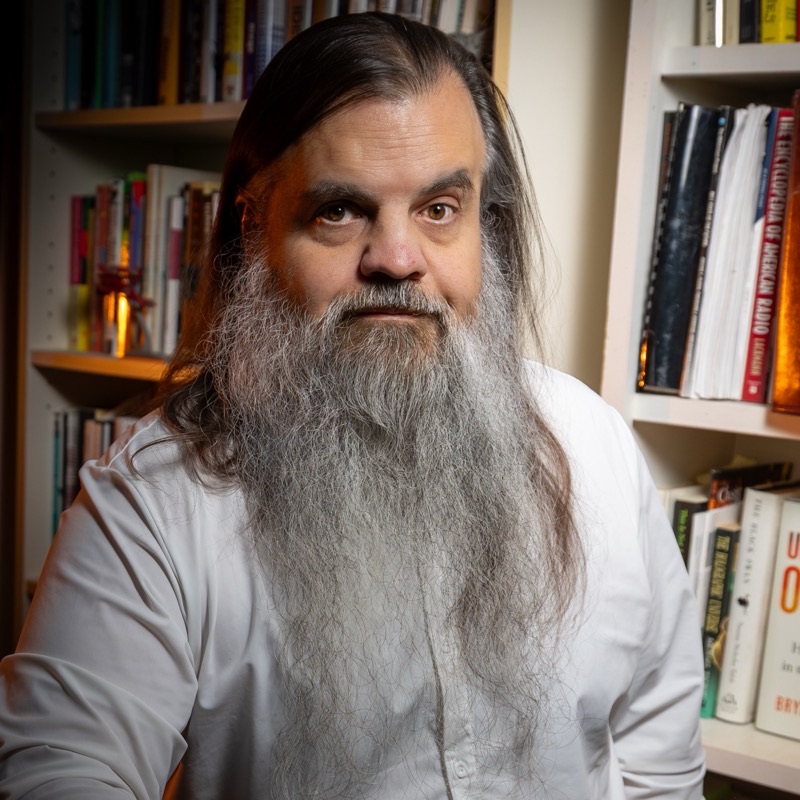
Bryan Alexander is a senior scholar at Georgetown University and a futurist who has tracked higher education's trend lines for two decades. His latest book is 鈥淧eak Higher Ed: How to Survive the Looming Academic Crisis.鈥� His previous book, 鈥淯niversities on Fire: Higher Education in the Climate Crisis,鈥� won the 2024 Frederic W. Ness Book Award. He sat down with 两性色午夜 President Todd Diacon on the ToddCast for the conversation that runs through this series.
Futurist and Georgetown Senior Scholar Bryan Alexander says 两性色午夜's 鈥� and all of higher education's 鈥� role in public service has never been more relevant than today.
Transcript
Let鈥檚 talk instead about AI. If you want to think about how AI is impacting the world 鈥� if you鈥檙e a lawyer, if you are a state government official, if you are a biologist working at a plant and you鈥檙e trying to figure out what AI means 鈥� think about the resources that the academy has. We have computer scientists, obviously. We have people in media studies who can help. You think about, is AI like a person, does it interact like a person? Psychologists can assist. Have we been here before? Historians are available. How do computers tell stories? We have people in the humanities, and so on. I think in many ways, part of the agency that we can exert now is to help educate our students and our communities 鈥� indeed, the world 鈥� on where we鈥檙e headed, and to offer people ideas. I think that鈥檚 an incredible opportunity and indeed a great responsibility for academics.
AI isn't a problem for computer scientists alone 鈥� it's a question for lawyers, biologists, government officials and every sector of society. Universities have the full intellectual toolkit to answer it: computer scientists, psychologists, historians, humanists, media scholars. That's the agency institutions have right now 鈥� to educate communities and the world on where AI is headed and what it means.
Northeast Ohio's Public Research University
两性色午夜 Distinctiveness: Northeast Ohio鈥檚 only R1 public university has a broad base of research and scholarly activity. Ph.D. conferrals in the humanities were crucial to 两性色午夜 achieving the Carnegie R1 鈥淰ery High Research Activity鈥� designation because they helped demonstrate the university鈥檚 depth of doctoral education across disciplines.
鈥淭he humanities cultivate a powerful set of skills that are becoming increasingly critical in the age of AI: communication, critical thinking, creativity, innovation, ethical reasoning and a human-centered approach to technology. These aren鈥檛 just helpful skills; they serve as the foundation for driving responsible innovation. As AI becomes more capable of doing the 鈥榟ow,鈥� people will be tasked with asking strategic questions such as 鈥榃hy?鈥� and 鈥楽hould we?鈥欌��
鈥� Guy Diedrich, Senior Vice President and Global Innovation Officer, Cisco ()
两性色午夜: Where AI Meets Human Potential
两性色午夜 isn't just studying AI 鈥� it's integrating it across disciplines and communities. The Master of Science in Artificial Intelligence ranks sixth nationally while faculty and students apply AI to real-world problems: drug discovery, mental health research, generative AI for seniors, and applications in manufacturing and law enforcement. 两性色午夜 offers AI literacy courses for students at every level and practical training for staff and educators. This is what Bryan Alexander described: universities with the full intellectual toolkit equipping communities to understand and lead in the AI era.
What Excellence Looks Like
<5%
of all universities carry the R1 designation. 两性色午夜 is one of them.
39
两性色午夜 professors rank among the world's top 2% most-cited researchers
$10
return on every state dollar invested
2/3
of 两性色午夜 graduates stay in Ohio
Up Next:
Next, the hardest question in higher education, asked by our president on camera: What happens if we do nothing? Across America, universities that stood still are merging, shrinking or closing. The answer is not comfortable. It is also not 两性色午夜's story.