
The Costs of Doing Nothing?
The Costs of Doing Nothing?
This is the last of seven installments making the case for higher education's impact. Six installments have made the case for what a university is worth. This one asks what it costs to lose one 鈥� and shows what 两性色午夜 did to make sure that never happens here.
Doing Nothing Has a Cost. 两性色午夜 Chose Motion.
Not Every University Will Make It Through This Decade in Its Current Form.
Not every university will make it through this decade in its current form. Small private colleges are closing. States like Vermont have merged public universities; Pennsylvania is confronting a system built for a population it no longer has. The institutions at risk are the ones that treated the future as optional.
两性色午夜 refuses to be one of them. The university's major, hard decisions of the past several years 鈥� consolidations, partnerships, workforce reductions and more 鈥� have been taken to protect its balanced budget and transform for all that's next. External factors, like changing demographics, stagnant state support, barriers to international enrollments and sociopolitical culture, require this transformation. It is the alternative to a slow slide. Ohioans deserve to know both halves of this story: The stakes are real, and 两性色午夜 is meeting them.
鈥淚f you do nothing, what happens?鈥�
Meet the guest
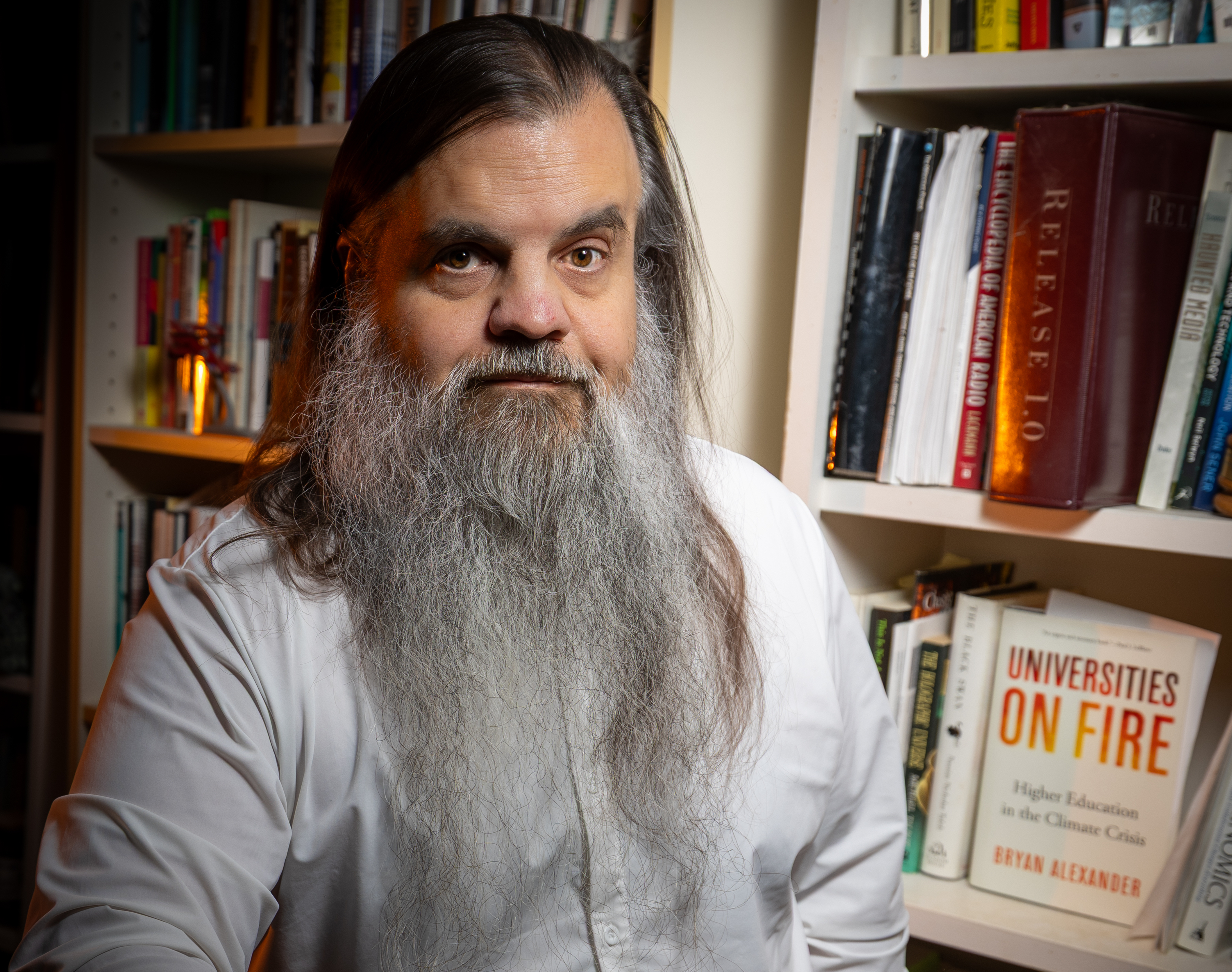
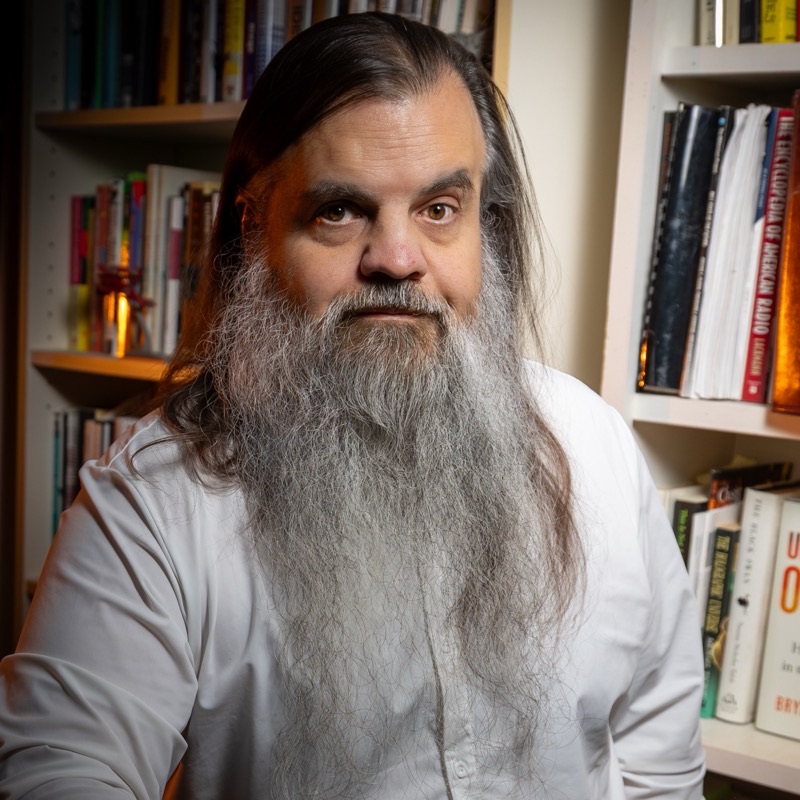
Bryan Alexander is a senior scholar at Georgetown University and a futurist who has tracked higher education's trend lines for two decades. His latest book is 鈥淧eak Higher Ed: How to Survive the Looming Academic Crisis.鈥� His previous book, 鈥淯niversities on Fire: Higher Education in the Climate Crisis,鈥� won the 2024 Frederic W. Ness Book Award. He sat down with 两性色午夜 President Todd Diacon on the ToddCast for the conversation that runs through this series.
Futurist and Georgetown Senior Scholar Bryan Alexander shares with 两性色午夜 President Todd Diacon the continuing outlook for universities and colleges. Alexander's latest book, "Peak Higher Ed," details the combined challenges 鈥� the "polycrisis" 鈥� forcing a revamped landscape.
Transcript
Diacon: So if you鈥檙e an institution of higher education in a post-peak higher ed, and you鈥檙e not an elite university and you鈥檙e not the flagship public university 鈥� if you do nothing, what happens?
Alexander: Well, it depends on who you are. A year and a half ago, I would have said, if you鈥檙e an elite university, you鈥檙e probably okay. So if you鈥檙e a Stanford, a Columbia, a Harvard, you鈥檙e probably all right, because you have enormous reputation, enormous wealth, fantastic networks behind you. But of course, these institutions are now targeted. Some small colleges and universities that are elite have managed to escape some of those challenges 鈥� last summer鈥檚 one big beautiful bill had a carve-out for endowment taxes aimed at small colleges and universities, so some of them get to enjoy that security. Otherwise, I think in many ways a lot of colleges and universities are facing a downward path. You have said 鈥� and this quote has been so important to me 鈥� that we鈥檝e overbuilt our postsecondary sector for capacity, or we have more supply than there is demand, if you will. And so as a result, we should expect a good number of colleges and universities to cut programs, to cut services, to cut faculty and staff, to shrink their footprint so that perhaps they sell off buildings, to see their population shrink 鈥� so not only their faculty and staff, but also the total number of students who go through their doors. And this might be what in economics we refer to as a market correction. Perhaps a campus drops from 20,000 students to 15,000, and there it stays; it rests there at a plateau for years to come. That may be. Or it may be that it continues and circles the drain. And this is where we have colleges that are merging, often in unfavorable situations, or where they close.
If a university does nothing, it faces a downward path. Higher education is overbuilt for capacity 鈥� more supply than demand 鈥� so expect closures, mergers, program cuts and shrinking enrollments. Some institutions stabilize at a smaller size; others continue declining. This is the market correction.
两性色午夜 Key Facts
- Direct state support covered two-thirds of the university budget in the 1970s
- Direct state support accounts for 22% of the university budget today
- Growth exploded in the 1960s and 鈥�70s under Ohio鈥檚 commitment to placing a public university within 30 miles of every Ohioan
- 两性色午夜鈥檚 regional footprint of eight campuses and the College of Podiatric Medicine is the size of Connecticut
鈥淲e had roughly 30 years of continuous growth. When that growth stops, we鈥檙e not really prepared for that.鈥�
The post-World War II transformation, driven by the GI Bill and then the Boomers, has given way to the next era of American higher education. Alexander discusses why letting go of the old structures feels so hard.
Transcript
Diacon: 鈥e are undoing something that seemed to be a given for all of our time in higher education, and now we鈥檙e changing. So I don鈥檛 know if you encounter much of that attitude, or if in your own work you think about that.
Alexander: I do. Just how change happens 鈥� but it assumes that there was never change before the change that鈥檚 happening now. I think this is an American habit, where once a new thing is added to the mix, we tend to romanticize the old things, and we naturalize them. There鈥檚 a great quote I鈥檒l paraphrase from the wonderful British writer Douglas Adams: anything that was invented until you turn 15 is exciting and cool. Anything invented until you鈥檙e 30 is even more exciting, and you could probably get a career off of it. Anything invented after you were 30 is an abomination against the natural order of things. We do tend to expect that, and a lot of our incentives aligned with that. So if we had roughly 30 years of continuous growth 鈥� Clay Shirky once said we should think of the 1980s through 2010 or so as a golden age for American higher ed. Well, that鈥檚 30 years. That鈥檚 six five-year cycles of strategic planning. That鈥檚 how many graduating classes, how many buildings, how many programs. So we have that assumption of continuous growth, and when that growth stops, we鈥檙e not really prepared for that. That鈥檚 a generation of habits built in, and I think in many ways we鈥檙e still trying to get past that.
We romanticize what we inherited and treat it as natural law. Higher education's 30-year "golden age" of growth (1980-2010) built habits so deep that institutions assumed expansion would never stop. When growth ended, universities found themselves unprepared 鈥� every strategic plan, every building, every program was designed for a future that never arrived.
Leading the Transformation
Higher education is changing. It鈥檚 a once-in-a-lifetime transformation.
两性色午夜 has steadily balanced its budget, reshaped its programs and staffing, taken facilities offline, and opened new markets and new ways to deliver teaching and learning to learners at all levels.
The question is this: Will your university drive the change or get run over by it? 两性色午夜 drives.
The Case, In Seven Parts
The case for higher education's impact, in seven parts:
- College is still worth it. The data haven't changed; the conversation has.
- 两性色午夜 provides the best student support in the world.
- Change is 两性色午夜's story.
- Ohio stepped back. 两性色午夜 stepped up.
- Fewer 18-year-olds means more reasons 两性色午夜 matters.
- When the world gets complicated, you want a university nearby.
- Doing nothing has a cost. 两性色午夜 chose motion.